Fragmentation
Multiple systems, operators and providers create blind spots across the citizen-service chain.
SWIFT INNOVATION SOLUTIONS
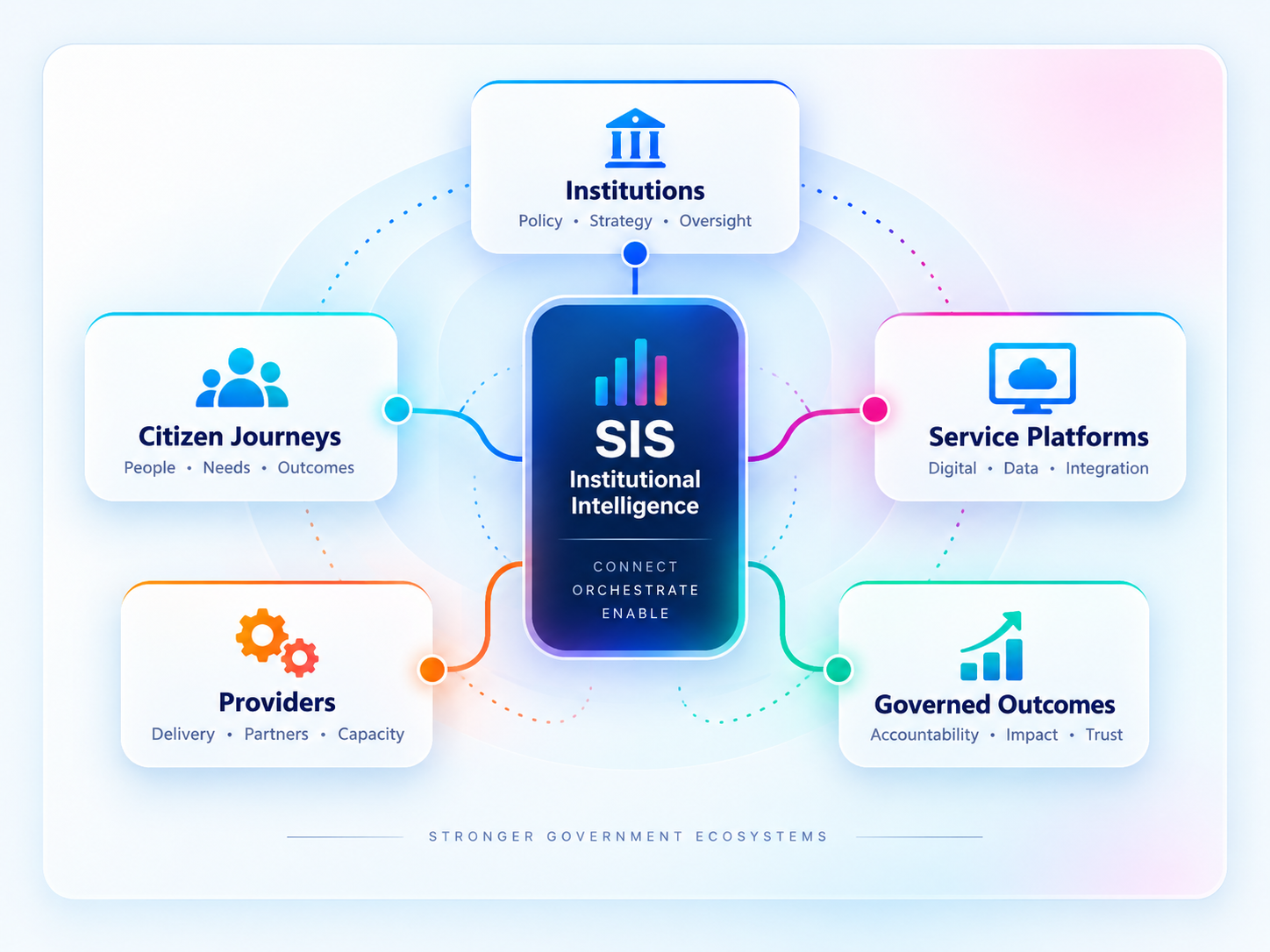
Swift helps governments understand, govern and orchestrate citizen-service ecosystems across institutions, providers, documents, platforms and service-delivery models.
Our approach is institution-first, vendor-neutral and continuity-oriented. We help public institutions reduce fragmentation, preserve service continuity, improve governance and build a credible path from PPP and hybrid models toward stronger sovereignty.
THE TRANSFORMATION CHALLENGE
Government services increasingly depend on institutions, platforms, service providers, contracts, citizen channels and official-document ecosystems that evolve at different speeds and under different authorities.
The objective is not to replace this ecosystem. It is to make it understandable, governable, portable and continuously improvable.
Multiple systems, operators and providers create blind spots across the citizen-service chain.
Responsibilities are often spread across ministries, agencies, providers and delivery channels.
A service failure may originate elsewhere in the ecosystem, outside the visible service point.
Institutional gaps surface through delayed journeys, broken handoffs, claims and service dissatisfaction.
WHAT SIS DOES
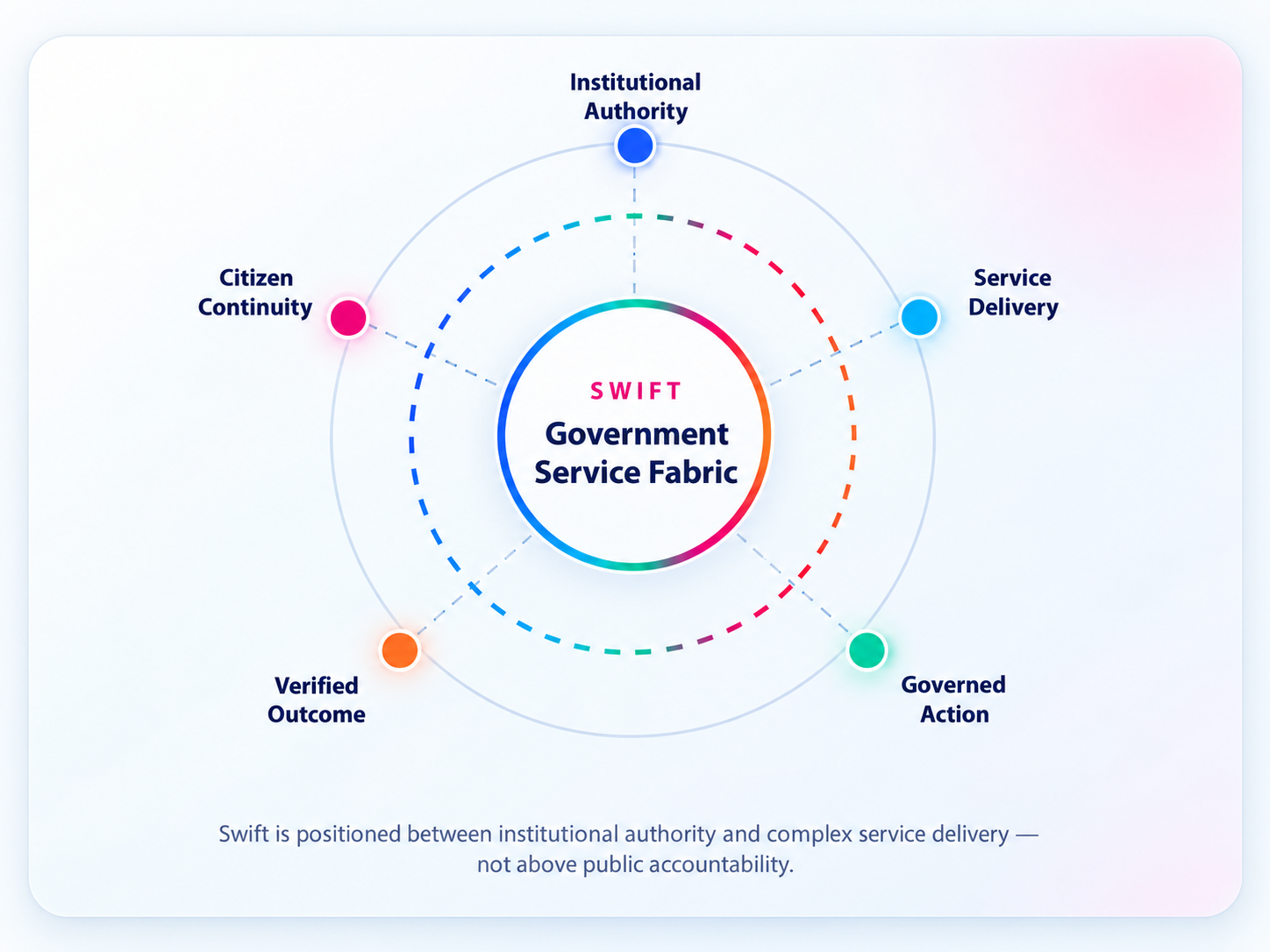
Swift is not positioned as a generic ERP, PMO or outsourcing operator. It is a modular institutional layer that helps government understand the ecosystem, govern its complexity and orchestrate action across public and private actors.
Map services, documents, responsibilities, providers, dependencies, channels and risk points.
Clarify institutional authority, decision rights, accountability and service rules.
Coordinate actors, transitions, service models, escalations and improvement actions.
Protect institutional memory and portability when operators, contracts or technology layers change.
SERVICE DOMAINS COVERED
Swift focuses on the citizen-facing and institutional service environments where identity, records, official documents, payments, delivery performance and continuity must remain coherent.
National ID, social ID, civil registry, birth and marriage certificates, passports and related identity services.
Resident cards, permits, official attestations, legalization and apostille workflows.
Driving licences, vehicle registration and related citizen-administration service chains.
Diplomas, certificates, verification paths and document traceability across institutions.
Fines management, payable obligations and service-linked payments connected to the citizen identifier.
A governed layer for document continuity, retrieval, traceability and long-term citizen record access.
OPERATING MODEL
Governments may continue with private operators, adopt a hybrid service-delivery model or progressively insource capabilities. Swift is designed to help preserve continuity across these transitions.
CONNECTED CITIZEN SERVICES
Swift can connect the service environment around the citizen journey: institutions, records, documents, providers, obligations, claims, escalations and performance indicators.
This allows government to move from isolated service management toward a more coherent and accountable institutional operating model.
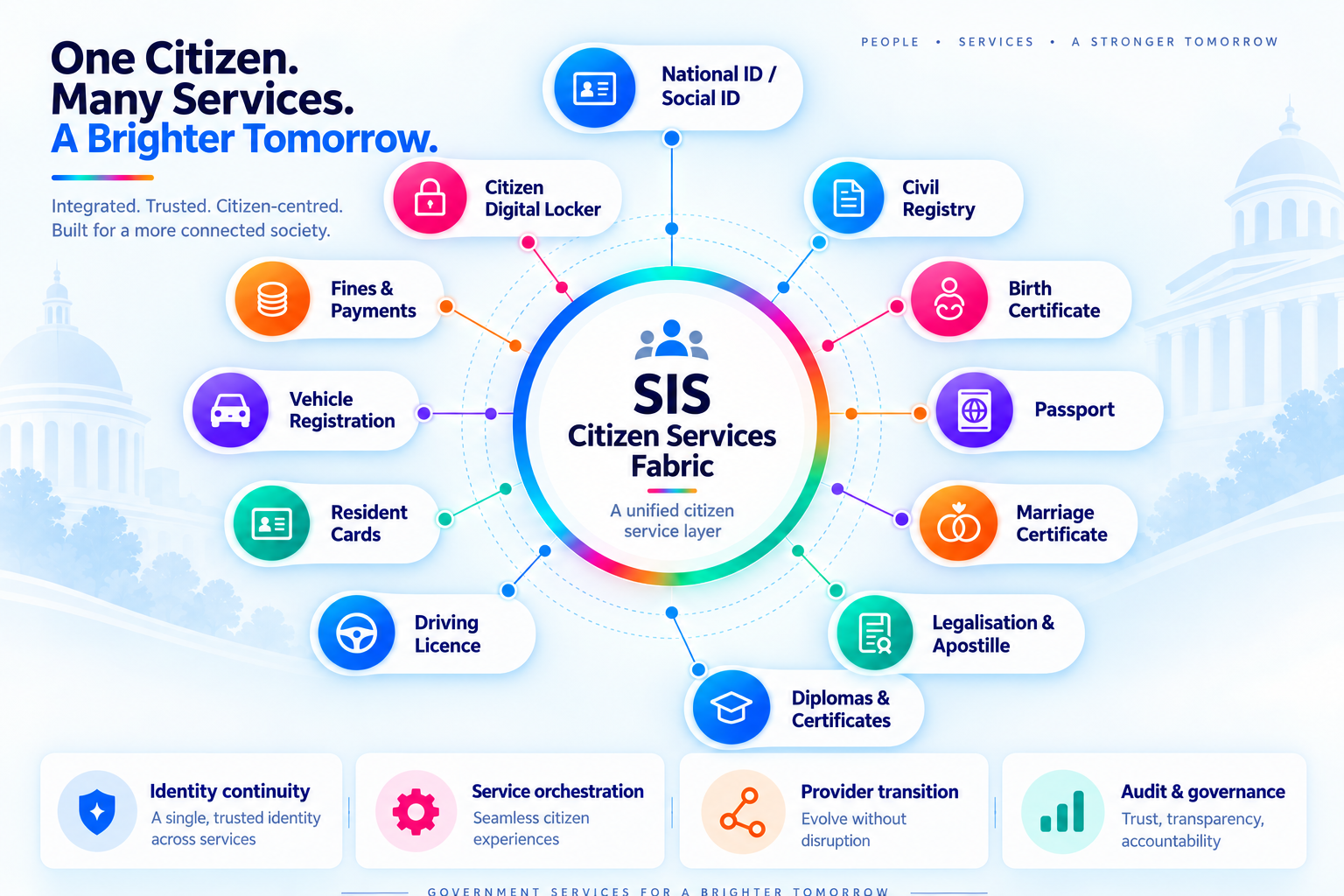
Illustrative service landscape. Authoritative records and legal identity remain under the responsible public institutions.
INTELLIGENCE ENGINES
The SIS platform is structured as a modular intelligence and orchestration environment. Different engines can be deployed progressively according to institutional needs.
Service health, SLA visibility, bottlenecks, dependencies and continuity monitoring.
Traceability across official documents, contracts, evidence and supporting records.
Use claims, issues and friction points to surface systemic governance gaps.
Monitor provider roles, transition conditions, obligations and service dependencies.
Apply escalation rules, issue prioritisation and human-governed decision visibility.
Track external trends, reforms, emerging laws and strategic improvement opportunities.
START WITH THE INSTITUTION
Whether the priority is identity, official documents, citizen services, provider continuity or institutional sovereignty, Swift helps public institutions design a more coherent path forward.